Are the Great Crowd the same as all the people in Paradise Earth?

Just as the Anointed 144,000 (the Little Flock) are selected “out of every tribe and tongue and people and nation” (Rev 5:9 NWT), so are the Great Crowd (Rev 7:9).  Neither of these two groups are the world, but they are both taken “out of” the world.  This larger group (the world) from which these two classes are taken “out of” is described in Daniel 7:14, ” And to him there were given rulership and dignity and kingdom, that the peoples, national groups and languages should all serve even him. His rulership is an indefinitely lasting rulership that will not pass away, and his kingdom one that will not be brought to ruin” (NWT).
This larger group is also described as the “nations” who live in the city (Rev 21:24), yet the Great Crowd is never said to enter the city, but “…they are before the throne of God; and they are rendering him sacred service day and night in his temple;” (Rev 7:15NWT).  The Great Crowd is brought before the Jehovah’s throne for service.  In contrast, the world of mankind (both raised from the dead and surviving Armageddon) are brought before the throne for judgment during the thousand year kingdom (Rev 20:12; Matt 25:31,32; Dan 7:9,10).  The Great Crowd is not the world of mankind on Paradise Earth.
The evidence points to three distinct kingdom classes 1) the Anointed Little Flock of 144,000, 2) the Great Crowd and 3) the world of mankind.
The fact that both the World (Rev 22:14) and Great Crowd (Rev 7:9) are described as wearing white robes does not prove they are the same group.  The Anointed 144,000 have white robes too (Rev 3:5; 19:8 –note that justification and righteousness are from same Greek root word Strong’s 1344).  All who become justified have white robes, because white robes are a symbol of justification/righteousness (Isa 61:10).  Anyone without a white robe (justification) has no standing with God (Matt 22:11-13).  At the time of the earthly Paradise, the world will “wash” their robes (Rev 22:14 – present tense in Greek), but the Great Crowd will already have clean robes (Rev 7:14 “washed” – Greek past tense).

Did Jesus Die a Ransom for Many or a Ransom for All?


“Who gave himself a corresponding ransom for all- this is what is to be witnessed to at its own particular times.” (1Ti 2:6 NWT_)
“Just as the Son of man came, not to be ministered to, but to minister and to give his soul a ransom in exchange for many.”” (Mt 20:28 NWT_)
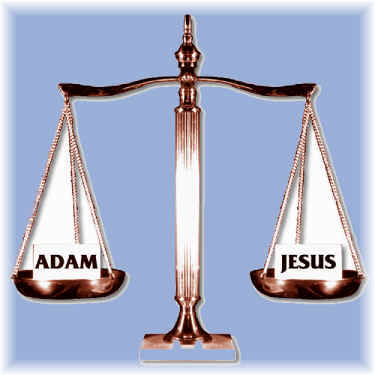
The Bible does not contradict itself.  Why did Paul say, that Jesus gave himself a ransom “for all,” but Jesus said “for many?”  The simple answer is that “many” means “all” as demonstrated in Romans.
“But it is not with the gift as it was with the trespass. For if by one man’s trespass many died, the undeserved kindness of God and his free gift with the undeserved kindness by the one man Jesus Christ abounded much more to many.” (Ro 5:15 NWT_)
In Romans 5:15, the “many” are ALL of Adam’s posterity, just like those who receive Jesus’ free gift.  Just as Adam’s posterity is ALL mankind, so those who will benefit from the free gift on Paradise Earth is ALL Mankind.  Yes, ALL Mankind will have the future opportunity of a trial for life under favorable conditions on Paradise Earth.  This is what the Society taught in the early days at the time of Pastor Russell.
Paul clearly explains what this free gift is for many (ALL) is:
“For the wages sin pays is death, but the gift God gives is everlasting life by Christ Jesus our Lord.” (Ro 6:23 NWT)

Where are we told in the Bible to confess our sins to God and not to a priest?

The concept of confession of sin to a priest is nowhere taught in either the Old or New Testaments. In fact, the New Testament teaches that all true believers are priests. 1 Peter 2:9-10 describes believers as a “holy priesthood” and a “royal priesthood,” “a people belonging to God.” In the Old Covenant, the Jewish nation could only approach God through its priests who offered sacrifices to God for the forgiveness of sins of the entire nation of Israel. This practice is no longer necessary because of Jesus’ one time all-encompassing sacrifice, which fulfilled the Law, thus granting Christians direct access to God for forgiveness of individual sins through Jesus Christ. “Let us then approach the throne of grace with confidence, so that we may receive mercy and find grace to help us in our time of need.” (Hebrews 4:16)
The New Testament teaches that the organization of Christ’s church would have elders, deacons (1 Timothy 3), overseers (Titus 1:6-9), and pastors (Ephesians 4:11).  There is never any mention of priests. Believers are told to confess their sins to God (1 John 1:9) and God is faithful and just to forgive sins as they are confessed to him. Although James 5:16 speaks of confessing trespasses to one another, this confession is in no way linked with God’s forgiveness of the trespass.
The Roman Catholic Church bases its practice of confession to a priest primarily on John 20:23, “If you forgive anyone his sins, they are forgiven; if you do not forgive them, they are not forgiven.” Because Jesus gave the apostles the authority to forgive sins, Catholics claim that that authority was passed on to their successors, i.e., the bishops and priests of the Roman Catholic Church. There are several problems with this interpretation. First, John 20:23 nowhere mentions confession of sin. Second, the scripture nowhere promises, or even hints, that the authority to forgive sins would be passed on to the successors of the apostles. Jesus’ promise was specifically directed to the apostles. Lastly, the New Testament nowhere states that the apostles would even have successors to their apostolic authority.
Therefore, should we confess our sins directly to God or do we need to confess them to a priest? We are to confess our sins to God.  He has the power to forgive us. “If we confess our sins, he is faithful and just and will forgive us our sins and purify us from all unrighteousness.” (1 John 1:9) A priest does not have the power or authority to forgive sins. No man living on earth in this day and age has that authority. This fact does not negate the need we have as individuals to confess our sins openly to other believers. That practice is encouraged in James 5:16, “Therefore, confess your sins to each other and pray for each other so that you may be healed.
The prayer of a righteous man is powerful and effective.” Although God hears the prayers of the righteous, a righteous individual has no power to eradicate the sin of another. However, and most importantly, we Christians are admonished to always forgive others for transgressions against us. “For if you forgive men when they sin against you, your heavenly Father will also forgive you. But if you do not forgive men their sins, your Father will not forgive your sins.” (Matthew 6:14-15)

Popular Posts